Oregon State Hospital
Fall Protection - Wall-to-Wall Flooring with Vinyl Overlay
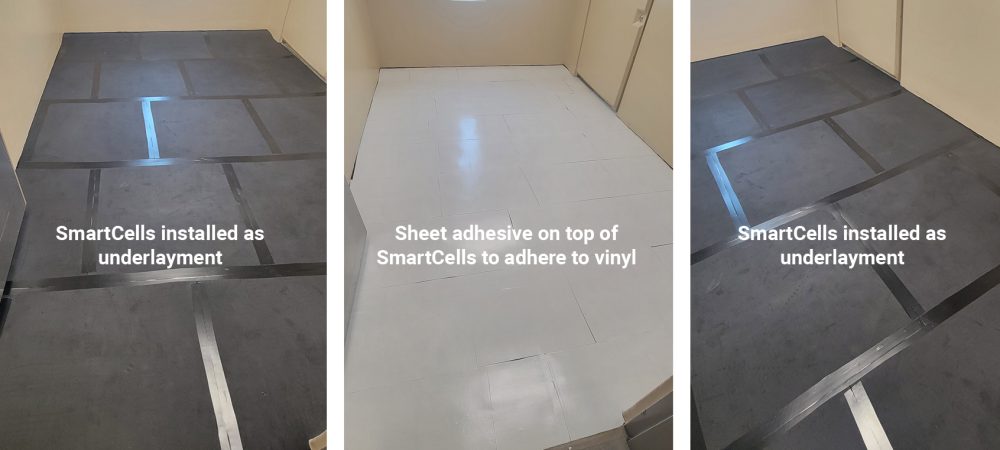
SmartCells 3'x3' tiles are installed under sheet adhesive. The sheet adhesive is used to adhere to the vinyl flooring.
Oregon State Hospital required a flooring solution for a seclusion room that would enhance patient safety while supporting staff in a high-risk, high-stress care environment. The space needed to minimize injury risk during falls, maintain stability underfoot, and integrate seamlessly with existing finish flooring—all without compromising durability or daily operations.
To meet these needs, SmartCells Fall Protection Flooring was selected and installed wall-to-wall, delivering a safer surface designed specifically for behavioral health applications.
Installation Details
The project included a total of 162 square feet of SmartCells Fall Protection Flooring installed wall-to-wall within the seclusion room. The system was adhered using vinyl tape, allowing for a secure installation while maintaining flexibility for future flooring changes if needed.
To ensure safe and seamless transitions in and out of the room, 12 linear feet of SmartCells transition ramps were installed at entry points. These ramps created smooth thresholds that support mobility equipment, reduce trip hazards, and maintain compliance with accessibility standards.
In addition, double-sided sheet adhesive was applied to the surface of the SmartCells flooring, allowing vinyl flooring to be installed directly on top. This approach provided the hospital with a clean, familiar finished surface while preserving the full impact-absorbing benefits of SmartCells beneath.
Why SmartCells Is Ideal for Seclusion Rooms
Seclusion rooms present unique challenges. Patients may experience sudden loss of balance, agitation, or involuntary movements that increase fall risk, while staff must operate in an environment where safety, visibility, and reliability are critical.
SmartCells Fall Protection Flooring is uniquely suited for these spaces because it delivers impact reduction without sacrificing stability. Our patented cushioning technology absorbs force during a fall, significantly reducing the risk of injury, while still providing a stable, supportive surface for standing, walking, and staff response.
Unlike traditional foam or padded flooring, SmartCells does not feel soft or unstable underfoot. Its energy-absorbing cells compress under impact and rebound instantly, helping maintain balance and reducing fatigue for staff who spend long hours in the space.
Benefits for Patients
For patients, the SmartCells system provides an added layer of protection during vulnerable moments. In the event of a fall or sudden movement, the flooring helps reduce impact forces, lowering the likelihood of serious injury. The stable surface also supports natural movement, helping patients feel more grounded and secure within the room.
By pairing SmartCells with a vinyl finish layer, the hospital was able to maintain a calm, clinical aesthetic while discreetly incorporating advanced fall protection beneath the surface.
Benefits for Staff
For staff, SmartCells contributes to a safer working environment by reducing the severity of patient falls and lowering the risk of staff injuries during interventions. The smooth transition ramps support quick, unobstructed entry and exit, while the firm, responsive surface allows staff to move confidently and maintain proper footing during critical situations.
Over time, the energy-return properties of SmartCells can also help reduce physical strain and fatigue, supporting staff performance and well-being.
Results
The SmartCells installation at Oregon State Hospital successfully delivered a safer, more resilient seclusion room environment – one that prioritizes injury prevention, supports staff efficiency, and integrates seamlessly with existing flooring systems.
This project highlights how SmartCells Fall Protection Flooring can be thoughtfully implemented in behavioral health settings to create spaces that are not only safer, but more supportive for everyone who relies on them.